- AI AUTOMATION
- AGENTIC AI
- SENIOR ENGINEERING
AI automation for manufacturers with their own online stores.
I automate work between people, documents, and software. I connect Shopware, PIM, and ERP and build AI assistants, agents, and workflows for product data, internal support, and B2B enquiries.
- Agentic AI since 2023
- 15 years in software engineering
- Shopware · PIM · ERP
- Remote for DACH

MY THESIS
Why I focus on manufacturers.
I believe manufacturers with their own products will gain ground in e-commerce through AI. They can organise product information, sales, and service with less manual work and build more direct customer relationships. I expect AI to recommend manufacturers more often when people ask for the best product in a category, because it often has more information about their products than about offers from pure resellers. As AI assistants increasingly compare products and also complete purchases, this advantage could grow. Retailers whose business mainly involves reselling interchangeable products would face greater pressure.
WHAT CAN BE AUTOMATED?
Four kinds of work that no longer need to stay completely manual.
Manufacturers with their own online stores connect product knowledge, sales, and service across established systems. These are four possible starting points for automation. Which ones fit your business depends on your data, processes, and approvals.
Prepare and connect product data
AI can extract and classify information from documents and source data and prepare it for PIM and store systems. Validation rules and approvals govern the next step.
- Data sheets and source material → structured product data
- Classification and validation → approval or a follow-up question
- Pass verified information to PIM and Shopware
Support your internal team
An internal assistant can combine Shopware data with approved knowledge, answer questions, and investigate issues. Unresolved cases go to the technical team with context.
- Search Shopware and internal knowledge
- Investigate store operations issues with traceable findings
- Answers with sources, access rules, and escalation
Prepare B2B enquiries
A workflow can analyse product questions and documents, gather missing information, and prepare quotations. The responsible people retain review and approval.
- Enquiries and documents → required product information
- Prepare follow-up questions and quotation documents
- Send quotations only after human review
Coordinate work across systems
APIs, rules, conventional workers, and AI are combined into one workflow. Where a suitable interface is missing, limited browser automation can handle individual steps.
- Reconcile data and explain differences
- Combine APIs, workers, and browser automation where appropriate
- Measurable handovers, approvals, and escalation on failure
AGENTIC AI SINCE 2023
What excites me about agentic AI.
I have worked with agentic AI since 2023, building on 15 years in software engineering and around ten years working with complex e-commerce systems. I take responsibility for technical implementation, from the interface to the running workflow.
Hardly a week goes by without new models, tools, or development environments. I follow this work with genuine curiosity and try many of them myself. It becomes exciting when a new capability turns into a useful workflow: a document is processed reliably, an agent uses a tool sensibly, or a process genuinely takes work off someone’s plate. Experiencing how quickly the possibilities are expanding—and turning them into solutions that work—is something I am thoroughly enjoying right now.
- Connected PIM and Shopware
- I built custom middleware connecting PIM and Shopware and implemented several brand storefronts with multilingual versions.
- Implemented B2B workflows
- I synchronised B2B customer groups with the ERP and built a quotation download that lets buyers obtain internal approval for their baskets before ordering.
- Built an internal Shopware assistant
- I built an internal support assistant with access to Shopware code, the database, and PIM middleware. It can investigate questions and escalate cases to technical staff with the conversation context.
WAYS TO START
Build, validate, or enable: the entry point follows your goal.
Some teams know the process and want to build. Others first need to find the leverage or test a technical uncertainty. Implementation is my core offer; analysis, prototyping, and workshops are possible entry points.
AI automation and agents
I design and implement a constrained workflow, connect the necessary systems, and define measurement, approvals, and operations.
Opportunity mapping and prototype
When value or feasibility is unclear, we prioritize processes and test the riskiest technical step with representative data.
Workshops and technical sparring
For teams that want to build or make better decisions: agentic AI, AI building, safe coding workflows, and realistic use cases.
DPP & AGENTIC COMMERCE
The product passport could become the trusted information layer for agentic commerce.
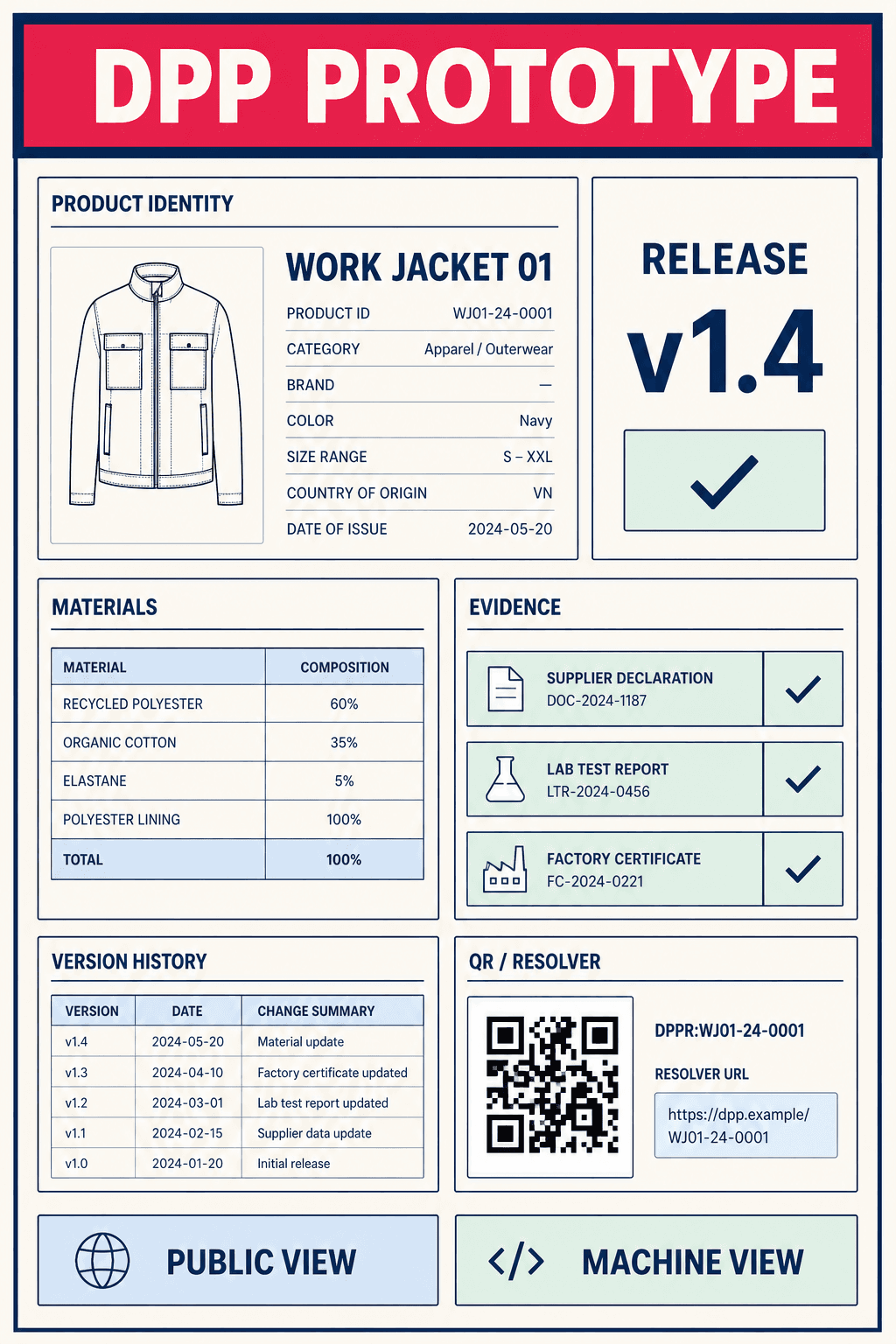
Today, I automate real business processes. Alongside that, I am working on making product information usable for future applications. My thesis: A technically sound Digital Product Passport can contribute to the information foundation for agentic commerce through structured product identity, attributes, and supporting evidence. Live prices, availability, and purchasing require their own connections to the store and ERP. A product passport alone does not automatically make a product discoverable or purchasable through AI assistants.
The important questions before an automation project.
New capabilities are exciting. A good project still needs concrete value, data, responsibility, and operations.
Do you work exclusively with manufacturers?
I focus on manufacturers with their own online stores, in both B2B and B2C. I connect product data, internal support, and B2B enquiries with Shopware, PIM, and ERP. I also take on suitable projects for retailers and other businesses where my experience in system integration and automation fits the task.
Does every process need an AI agent?
No. Known, stable steps usually belong in an API, import, or conventional worker. An agent becomes useful when context is incomplete, tools depend on the case, unstructured information must be understood, or exceptions need handling.
What does agentic AI mean at EinfachAI?
An agentic system does more than answer a question. Within defined boundaries, it can gather information, use tools, perform actions, check results, and escalate difficult cases. The process—not the demo—determines how much autonomy is appropriate.
How do you handle sensitive data and dependencies?
Data minimization, access control, model choice, logging, and hosting are architectural decisions. Where useful, I consider European hosting, open models, and interchangeable components. Sensitive data is not automatically passed to public models.
What work should your team no longer perform manually?
Show me a recurring process. I will give you an initial assessment of whether conventional automation, an AI workflow, an agent, or no project at all is the right next step.